Chapter Books for Emotionally Sensitive Kids: Where to Start
If you're raising or teaching a child who feels things more intensely than other kids, you've probably already noticed that the wrong book can make things harder rather than easier. A story that ends too tidily can feel dishonest. A character who bounces back too quickly can make a sensitive child feel like their own slower recovery is a failure.
But the right book meets the child exactly where they are and makes them feel less alone there. This is the heart of bibliotherapy, and for emotionally sensitive kids, choosing the right book matters more than most people realise. The question is knowing what to look for.
What does emotionally sensitive mean in children?
Emotionally sensitive children, sometimes called highly sensitive children, are those who process experiences and emotions more deeply than most of their peers. They make up an estimated 15 to 20 percent of children and tend to move through the world with a nervous system that notices and responds deeply to what's happening around them. This makes them quick to grasp subtle changes, prefer to reflect deeply before acting, and generally behave conscientiously, but they are also easily overwhelmed by high levels of stimulation, sudden changes, and the emotional distress of others.
In a classroom, this child might be the one who shuts down after a critical comment from a teacher. At home, they might be the one who carries the weight of a family tension nobody else seems to notice. They're often described as too much, too emotional, or too sensitive, and they frequently hear those words as confirmation that something is wrong with them, rather than as a description of a trait that, handled with care, becomes one of their greatest strengths.
Why Chapter Books for Emotionally Sensitive Kids Matter

Picture books absolutely have their place, but chapter books for emotionally sensitive kids offer something different: time.
A chapter book gives a character room to stay inside a difficult experience instead of rushing toward a tidy resolution..
For a child who already knows hard things don't resolve neatly, that honesty is validating in a way that a tidy picture book resolution often isn't.
Chapter books also give the sensitive child a companion. A character they can return to over multiple reading sessions, whose internal world they come to know deeply, whose struggles and recoveries happen at a pace that feels real. That kind of ongoing emotional connection with a character can be incredibly powerful for a child who often feels misunderstood in real life.
What to Look for in Chapter Books for Emotionally Sensitive Kids
Not every chapter book suits a sensitive child, and choosing the wrong one at the wrong moment can close a child down rather than open them up.
Here's what to look for:
The emotional experience is specific, not generic. A sensitive child will see through vague descriptions of feelings immediately. The books that work are ones where the internal experience is described with precision, the exact quality of a particular shame, the particular weight of carrying something nobody else seems to notice, the specific texture of grief.
The character isn't fixed too quickly. Emotionally sensitive children are often made to feel that their emotional responses are too slow, too big, or too prolonged. A book that models recovery as a fast, clean arc reinforces that message. The books that tend to stay with them are the ones where healing feels gradual, messy, and real.
The story doesn't require the child to be further along than they are. Some books, even well-meaning ones, treat sensitivity like something that needs fixing. The right books position sensitivity as a valid and valuable way of being in the world, one that comes with challenges but also with real gifts.
The language respects their intelligence. Emotionally sensitive children are often deeply perceptive, even when they struggle to manage what they're feeling. They notice condescension immediately. Books that trust them to handle complexity will hold their attention; books that simplify will lose them.
Chapter Books for Emotionally Sensitive Kids Worth Knowing
The One and Only Ivan by Katherine Applegate (grades 3 to 6)

Ivan is a gorilla living in a shopping mall, and this book is narrated entirely from his perspective with a level of internal richness that sensitive children respond to deeply.
The themes of belonging, confinement, and slowly finding a way toward something better resonate deeply with children who feel they don't quite fit the environment they're in. It's understated in the best possible way and carries a genuine emotional weight that doesn't resolve artificially.
Best for: sensitive readers grades 3 to 6, particularly those navigating feelings of not belonging.
Tuck Everlasting by Natalie Babbitt (grades 4 to 7)

Tuck Everlasting asks questions that sensitive children are already asking themselves: what makes a life meaningful, what does it cost to live outside ordinary time, and what do you do when you love something you can't keep?
It's one of the few middle grade books that treats mortality and the passage of time with real emotional complexity rather than something to be reassured about. For a highly sensitive child, it's often a book they return to multiple times as they grow.
Best for: sensitive readers grades 4 to 7, particularly deep thinkers who ask big questions.
Bridge to Terabithia by Katherine Paterson (grades 4 to 7)
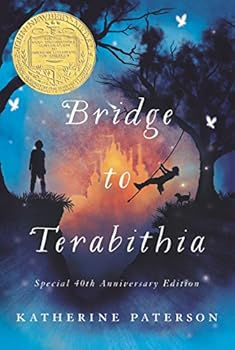
This is a book adults should preview first before handing it to an emotionally sensitive child, not because it should be avoided, but because it deals with sudden, unexpected loss and the experience of grief that follows.
For the right child at the right moment, it's one of the most honest and compassionate treatments of grief in children's literature. For a sensitive child who has experienced loss, it may be the first time they've seen their own experience reflected accurately.
Best for: sensitive readers grades 4 to 7 navigating grief or loss, with adult support for the conversation it opens.
The Radical Ray series by Bobbi Chegwyn (grades 2 to 7)

Four books, one boy, and a series written for the child who feels everything a little more deeply than the people around them.
Ray Roxby is perceptive, honest, and often overwhelmed, and the Radical Ray series never asks him to be otherwise.
Book 3, The Too Much Moment, is particularly suited to emotionally sensitive children who have been told they are too much.
It follows Ray through the experience of having his natural self described as a problem by a teacher, and the slow, uncertain work of finding his way back to himself, not with easy answers, but one small true thing at a time.
Book 4, No Greater Love, explores childhood grief with a level of honesty rarely seen in chapter books for ages 10 to 13.
Each book includes built-in discussion questions, making it easy for a parent, teacher, or school counselor to open a conversation after a chapter rather than having to find their own way in. The series is endorsed by Melissa Kappes, M.A., M.Ed., LPCC-S, a licensed therapist with more than thirty years of experience working with children and families.
Best for: emotionally sensitive children and boys aged 7 to 13, grades 2 to 7. Available on Amazon.
A note for parents and teachers choosing books for sensitive kids
The most important thing is to read the book yourself first, or at least preview it. Not to assess whether it's appropriate in a general sense, but to know what it's going to ask of the child emotionally. When a book unexpectedly brings something painful to the surface before a child is ready for it, the experience can feel overwhelming without a trusted adult nearby who already understands the story too.
The goal isn't to protect a sensitive child from emotional content in books. Emotionally sensitive children still need stories that explore difficult emotions, partly because fiction can be one of the safest places to process them. The goal is to be present for what comes up when they do.
Chapter books for emotionally sensitive kids aren't a niche category. They're some of the best literature written for children, because the qualities that make a book work for a sensitive child, honesty, specificity, emotional depth, and a character worth trusting, are the same qualities that make any book genuinely good.
The child who feels things deeply often becomes the reader who notices the most, remembers the most, and carries stories with them the longest.

Comments